
summary: treatments for depression together with ECT and antidepressants boost mind connectivity in those with clinical melancholy.
source: European school of Neuropsychopharmacology
Scientists consider that the constitution of the adult mind is often rigid and incapable of rapid adjustments; now new work has shown that here's not true.
German researchers have proven that in-affected person medication for melancholy can result in a rise in brain connectivity, and people sufferers who reply smartly to this medicine exhibit a improved boost in connectivity than those that don't.
proposing the work on the European faculty for Neuropsychopharmacology Congress in Vienna, lead researcher, Professor Jonathan Repple observed:
Commenting, Dr Eric Ruhe, Rabdoud college scientific core, Nijmegen, the Netherlands stated:
"This ability that the brain constitution of patients with critical medical depression is not as fixed as we idea, and we are able to enrich mind structure within a short time body, round 6 weeks.
"We found that if this treatment leads to a rise in mind connectivity, it is additionally constructive in tackling melancholy symptoms. This offers hope to sufferers who believe nothing can alternate and they should live with a sickness always, because it is "set in stone" of their mind".
The researchers, working on the institution of Muenster in Germany, studied 109 sufferers with critical depression (foremost Depressive sickness) and in comparison them with 55 in shape controls. Their brains have been scanned the use of an MRI scanner which had been set up to identify which components of the mind had been communicating with different ingredients, identifying the degree of connections within the brain.
The sufferers were then treated for melancholy, some with electroconvulsive therapy (ECT), some with psychological therapy or medicine, some with a mixture of all treatment plans. After medicine they had been then rescanned and the variety of connections recounted. They were additionally retested for indicators of melancholy.
Professor Repple (now Professor of Predictive Psychiatry on the tuition of Frankfurt) mentioned:
"We discovered that treatment for melancholy changed the infrastructure of the brain, which matches towards previous expectations. treated patients confirmed a more suitable variety of connections than that they had shown earlier than remedy.
"in addition, those who showed the most response to medication had developed a more suitable the number of new connections than those who confirmed little response.
"A second scan showing that there are not any time outcomes in in shape controls supports our findings that we see whatever this is related to the ailment and greater importantly the treatment of this ailment.
We discovered these alterations took location over a duration of only around 6 weeks, we had been shocked on the pace of response. We don't have an evidence as to how these adjustments take region, or why they may still happen with such different sorts of remedy".
"here is a really pleasing and complicated to operate look at in which the authors repeated MRI-scans to show adjustments in structural connectivity over time in patients handled for depression.
The consequences align very a great deal with our present perception that the brain has a great deal more flexibility in adaptation over (even short) time than became in the past thought. certainly a major idea of what medicine of depression (and different psychiatric illnesses) invoke is plastic changes over time. This has been proposed as a standard mechanism for antidepressants, psychotherapy and electroconvulsive therapy.
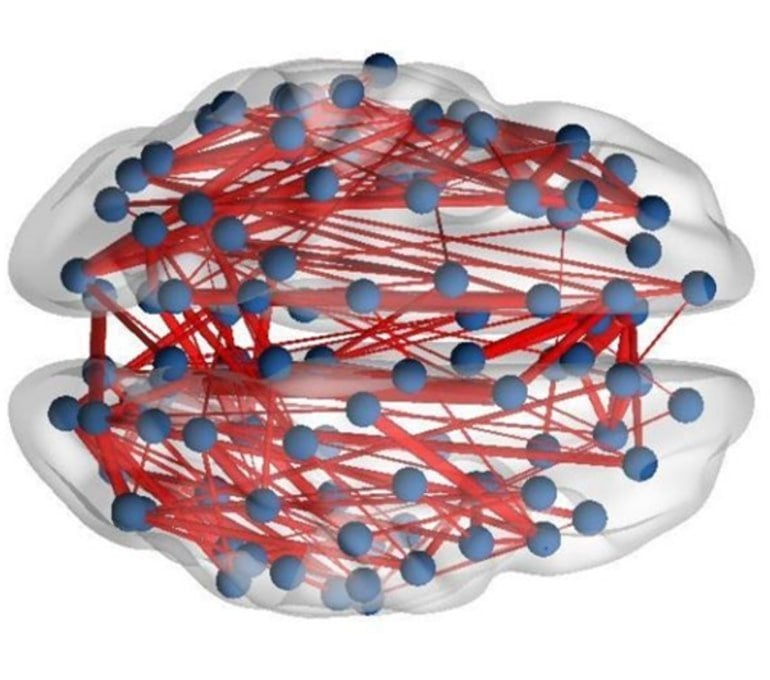 consultant map of the affected connections in the mind. The number of these connections expanded after remedy. credit: Jonathan Repple
 although, the quantity of research to clarify what alterations are necessary or specific for response to medicine or remission of the depression is limited.
in addition, the subsequent question is whether or not distinct cures have the chance to particularly change focused mind networks or vice versa whether we are able to use the disturbances in brain-networks as measured in the latest examine to select which remedy may be helpful.
The undeniable fact that the accompanied changes over time couldn't be associated with a form of treatment is a pity, but because the authors themselves suggest a subject for extra analysis.
"First these effects may still be replicated in unbiased samples which optimistically goes to take place soon.
"2d further elaboration on this strategy can be daunting and may be supported firmly as this work could support to bridge the current hole between neuroscience and facts primarily based patient care".
here is an unbiased comment, Dr Ruhe became no longer worried in this look at.
author: Tom ParkhillSource: European faculty of NeuropsychopharmacologyContact: Tom Parkhill – European college of NeuropsychopharmacologyImage: The image is credited to Jonathan Repple
original analysis: The findings were offered at the 35th European college of Neuropsychopharmacology annual conference
Post a Comment